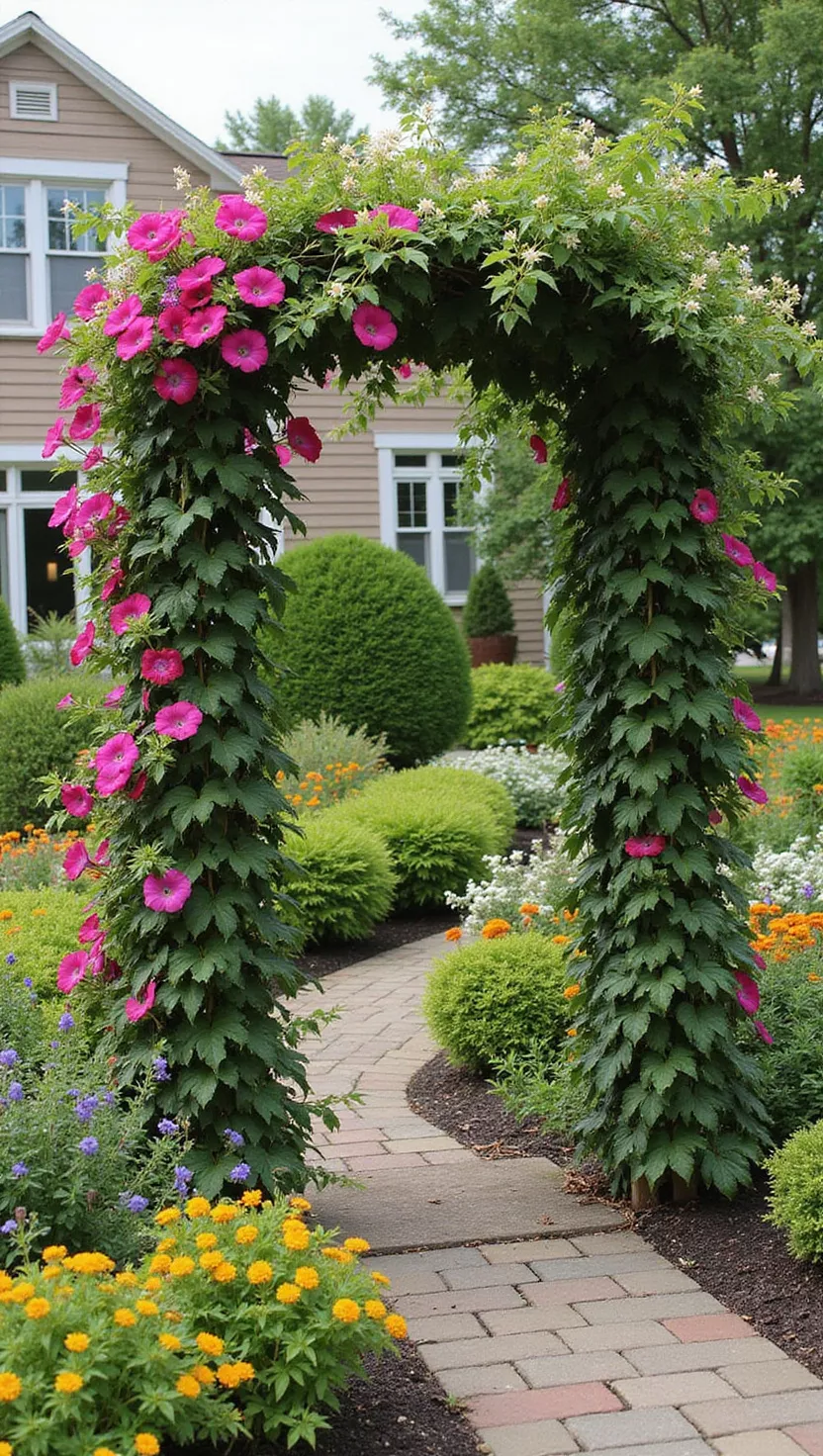
21 Garden Path Ideas
Looking for ways to spruce up your outdoor space? These 21 garden path ideas will transform how you move through your yard. From classic stone to modern concrete, you’ll find the perfect path to match your style.
Stone Slab Pathway
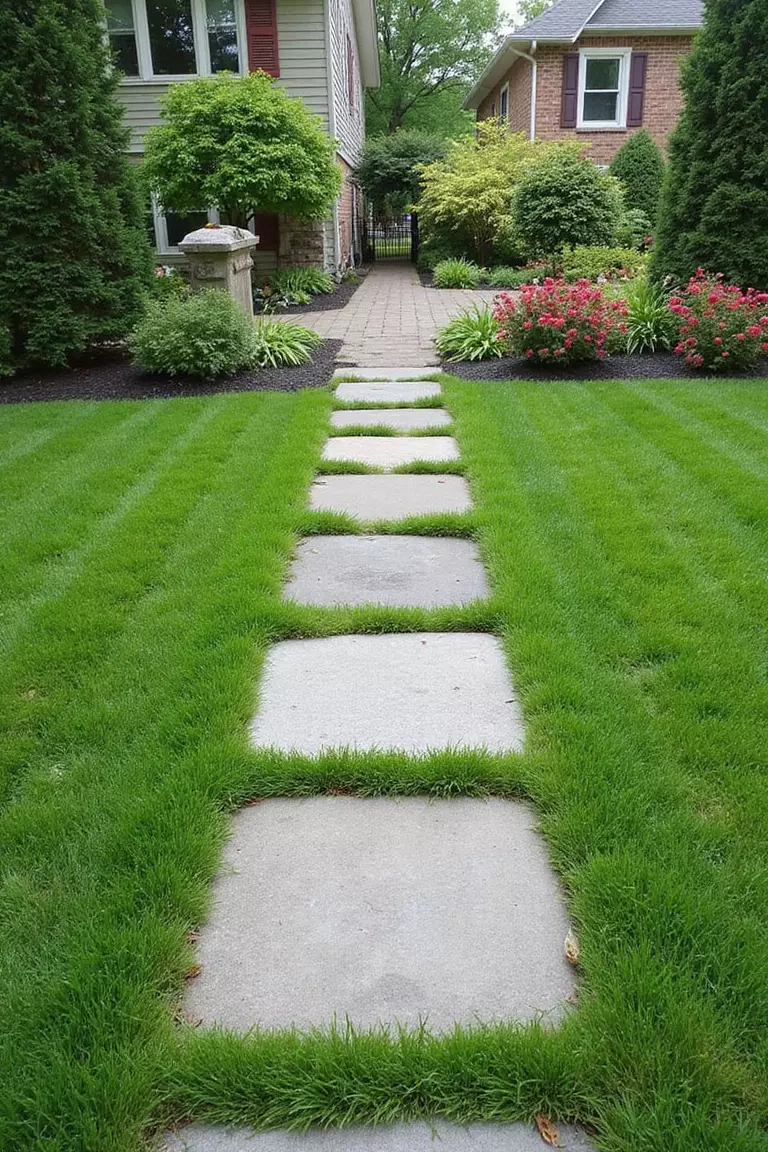
Stone slabs create a sturdy path that looks like it belongs in your garden.
You can place these flat rocks close together or leave gaps for ground cover plants to grow between them.
They work well in both formal gardens and casual, naturalistic settings.
Plus, they last for years with little upkeep.
Gravel Path
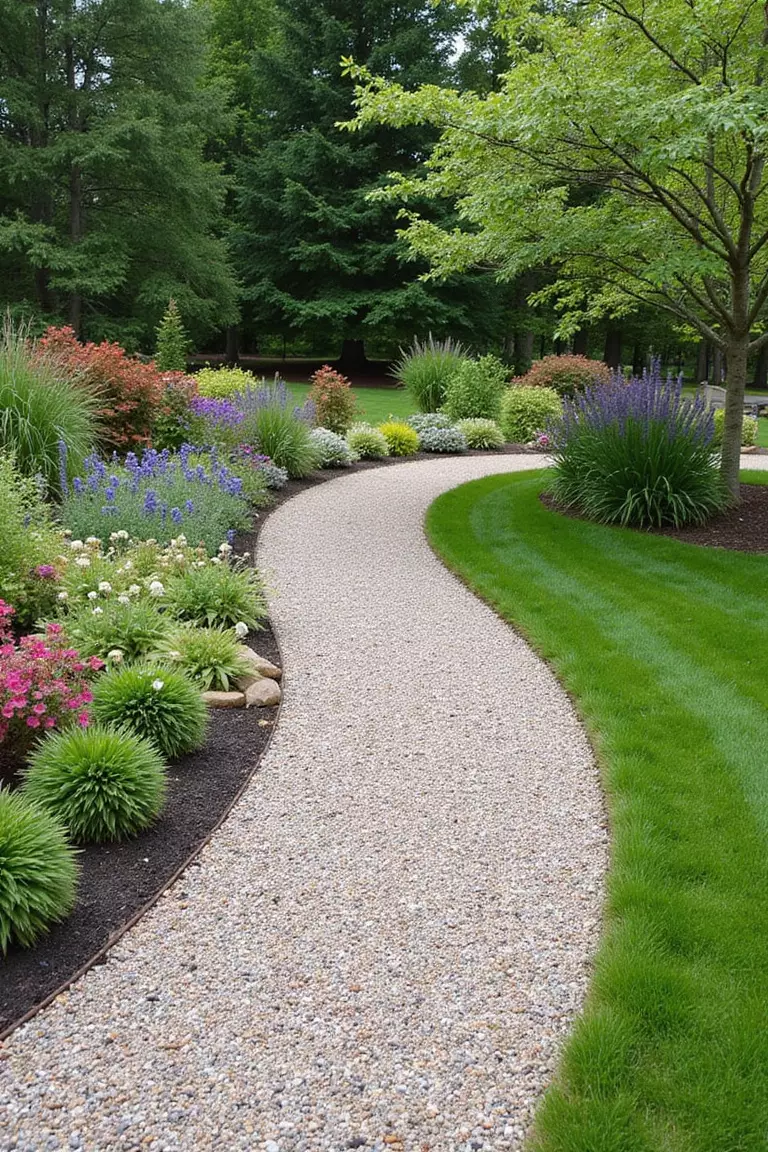
Gravel paths add a pleasing crunch underfoot as you walk through your garden.
They drain well during rainy weather and are easy to install yourself.
Simply dig a shallow trench, add landscape fabric to block weeds, and fill with gravel.
Refresh the top layer every few years to keep it looking fresh.
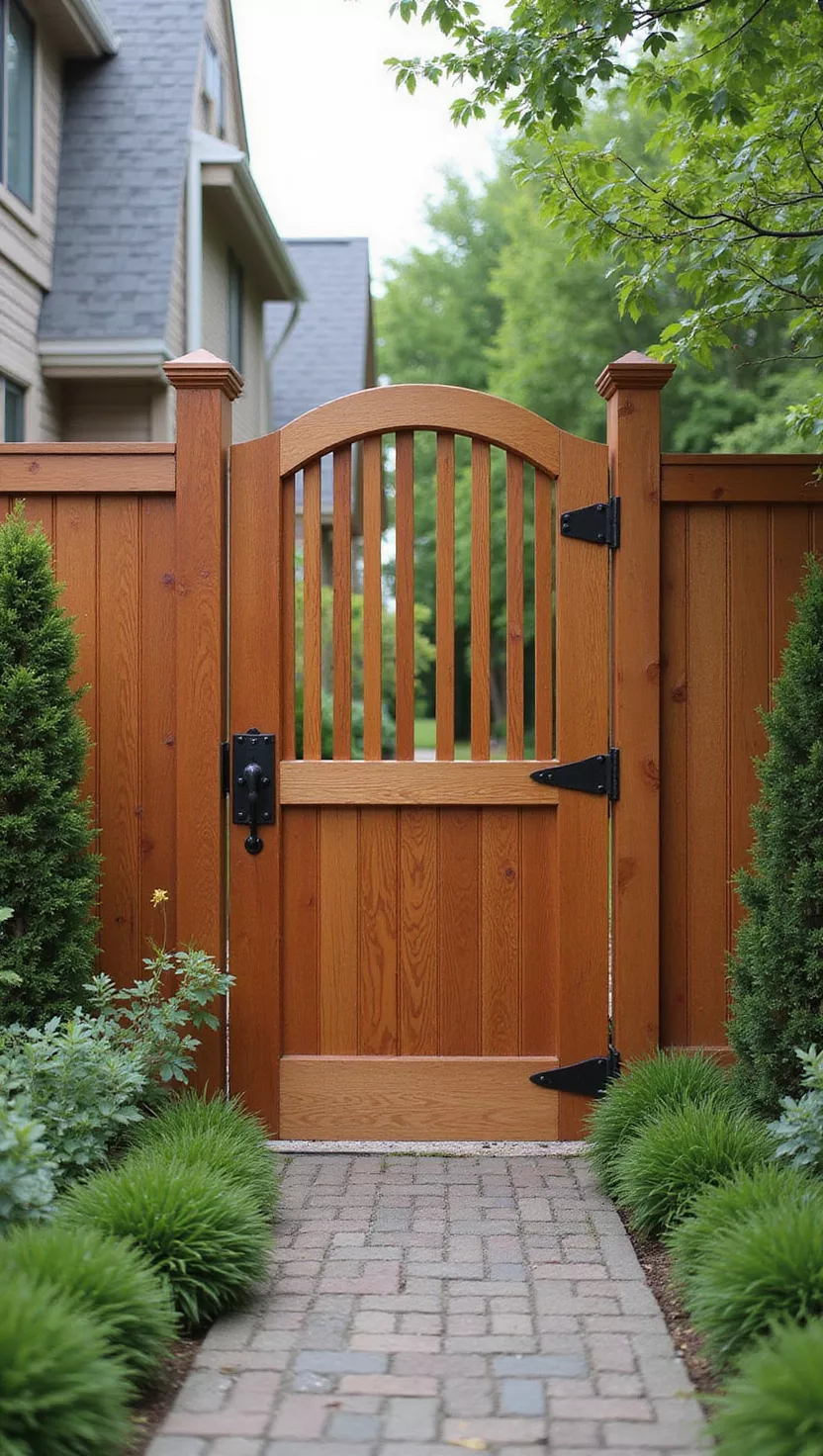
Brick Pathway
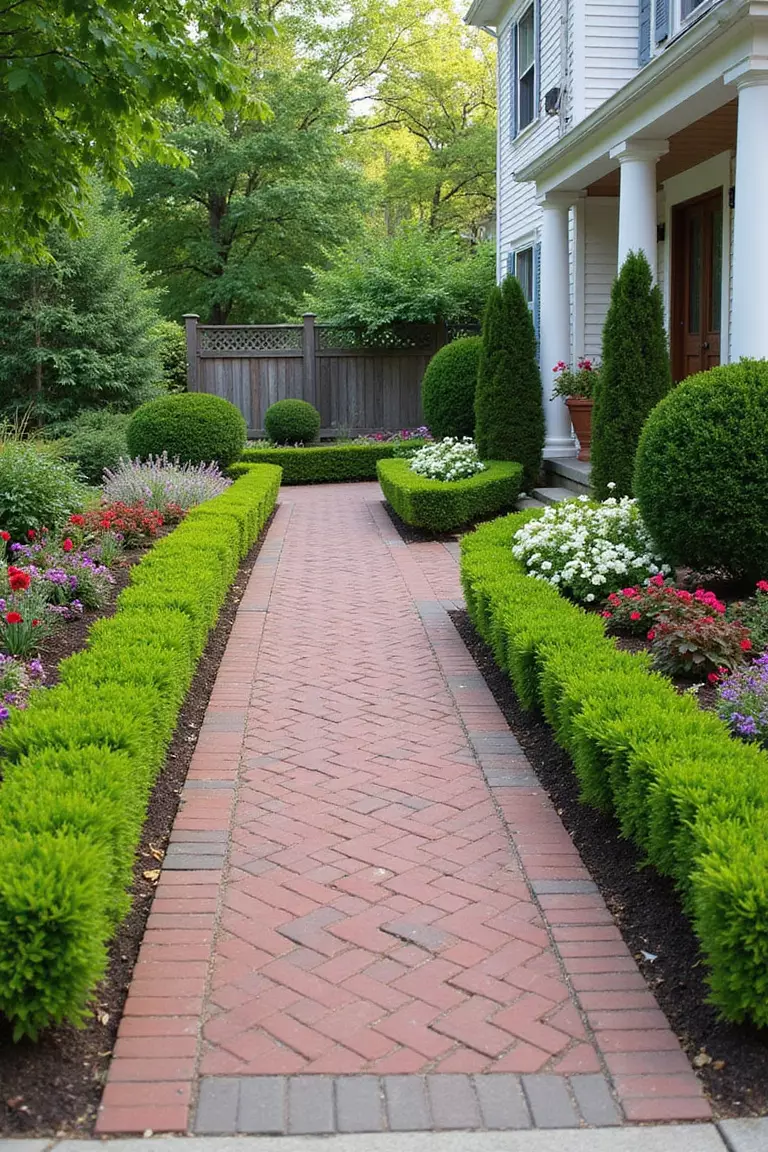
Brick paths bring classic charm to any garden style.
You can lay bricks in many patterns—straight lines, herringbone, or basket weave.
The warm red-orange tones look great with green plants and flower colors.
Though installation takes time, a well-built brick path will last for decades.
Wooden Boardwalk

Wooden walkways add a touch of warmth to your garden.
They work well in wet areas or to bridge different garden sections.
Choose cedar, redwood, or pressure-treated lumber for durability.
Seal the wood every few years to prevent rot.
The slight spring in wooden paths feels good underfoot.
Stepping Stone Path
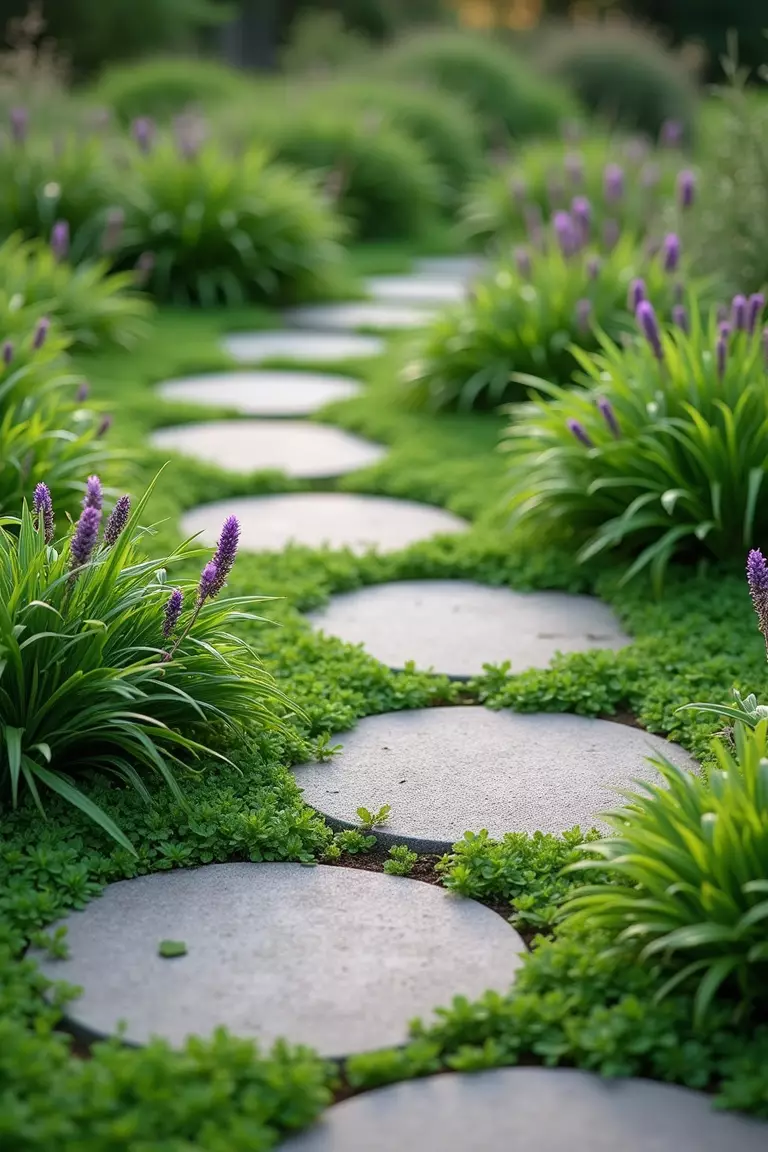
Stepping stones create a playful path that draws you through the garden.
Place them at a comfortable walking distance apart—about 24 inches from center to center.
You can buy premade stones or make your own with concrete molds.
Plant low-growing herbs or moss between them for a soft effect.
Mixed Material Path
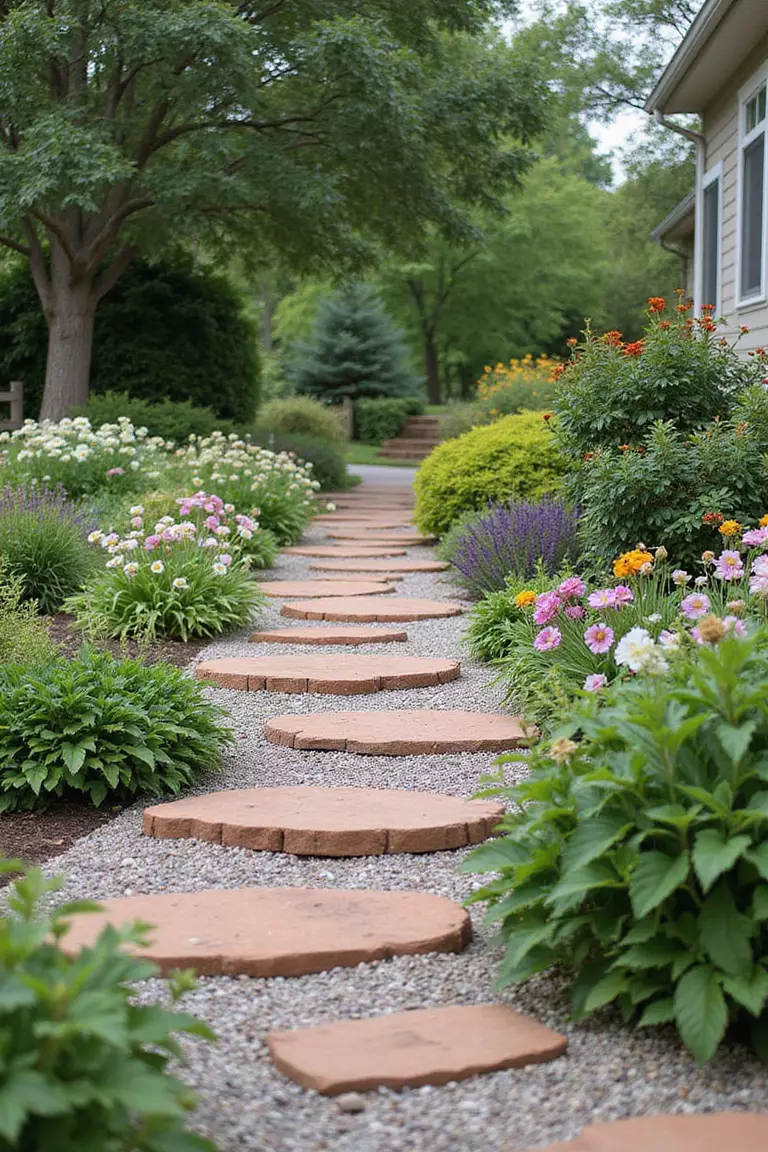
Combining materials creates visual interest in your garden path.
Try sections of brick that flow into gravel, or wood rounds next to stone slabs.
This approach lets you use leftover materials creatively.
The contrast between textures makes your garden journey more exciting and draws the eye forward.
Concrete Paver Path

Concrete pavers offer endless options for colors, shapes, and patterns.
They’re affordable, durable, and easy to replace if damaged.
Create formal geometric layouts or casual random patterns.
Modern pavers can mimic natural stone at a lower cost.
A properly installed paver path will stay level for years.
Mulch Path

Mulch creates soft, natural-looking paths that blend into garden beds.
Wood chips, bark, or pine straw work well and suppress weeds.
Refresh mulch yearly as it breaks down.
Edge your path with stones or metal edging to keep it tidy.
Mulch paths feel springy underfoot and reduce mud.
Flagstone Path

Flagstone’s irregular shapes create paths with natural character.
You can fit pieces tightly together or leave gaps for plants.
The varied colors—from blue-gray to rusty red—add interest.
Though pricier than some options, flagstone’s durability makes it worth the investment.
It stays cool in summer heat.
Crushed Shell Path
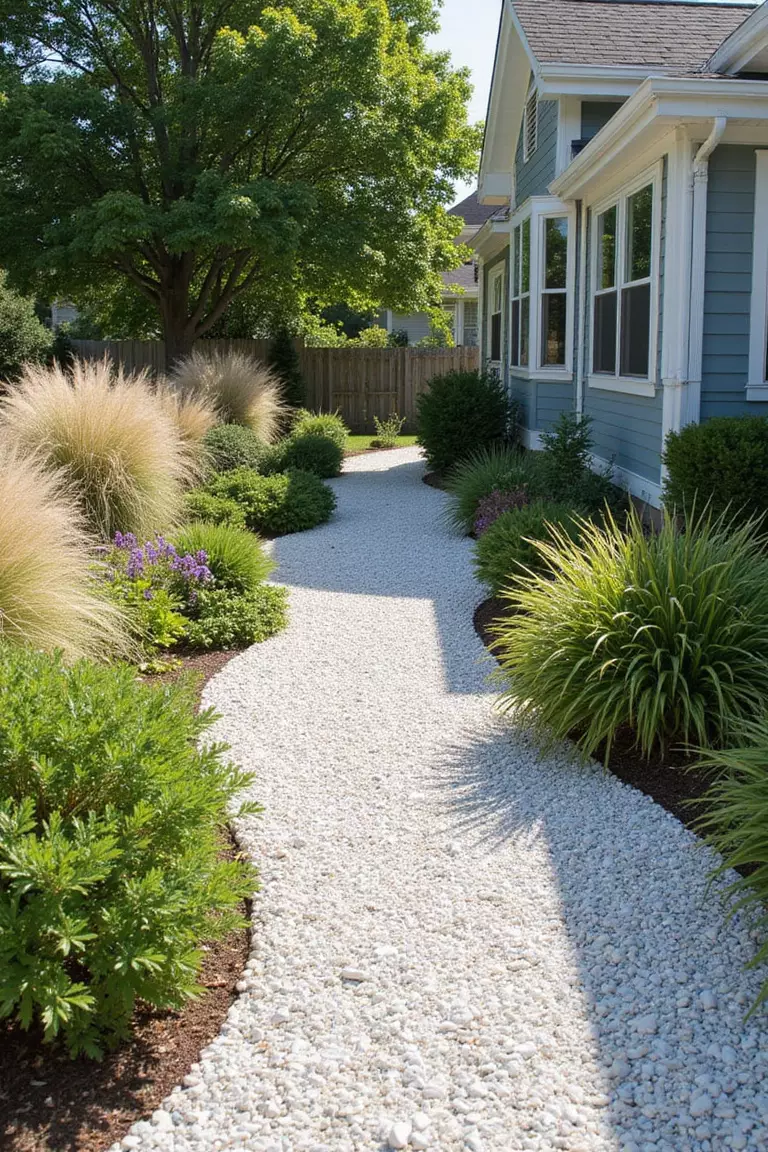
Crushed shells bring coastal charm to your garden.
The white surface reflects light, brightening shady areas.
Shells crunch pleasantly underfoot and drain well.
They’re often available cheaply in coastal areas.
Over time, shells break down and need topping up.
They look best with beach-themed or cottage gardens.
Pea Gravel Path
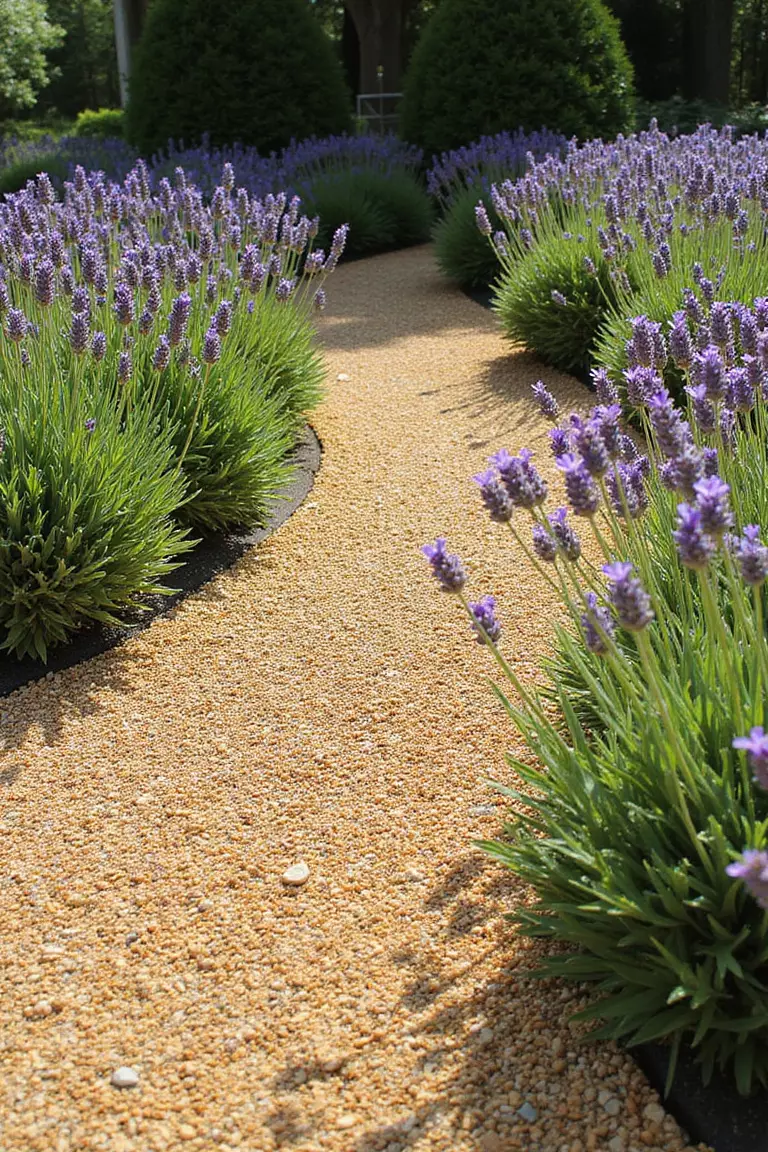
Pea gravel’s small, rounded stones feel good underfoot and make a satisfying crunch when walked on.
The tiny stones come in various colors to match your garden style.
Add edging to keep gravel contained.
Rake occasionally to keep the surface level.
Pea gravel drains well and deters weeds.
Decomposed Granite Path
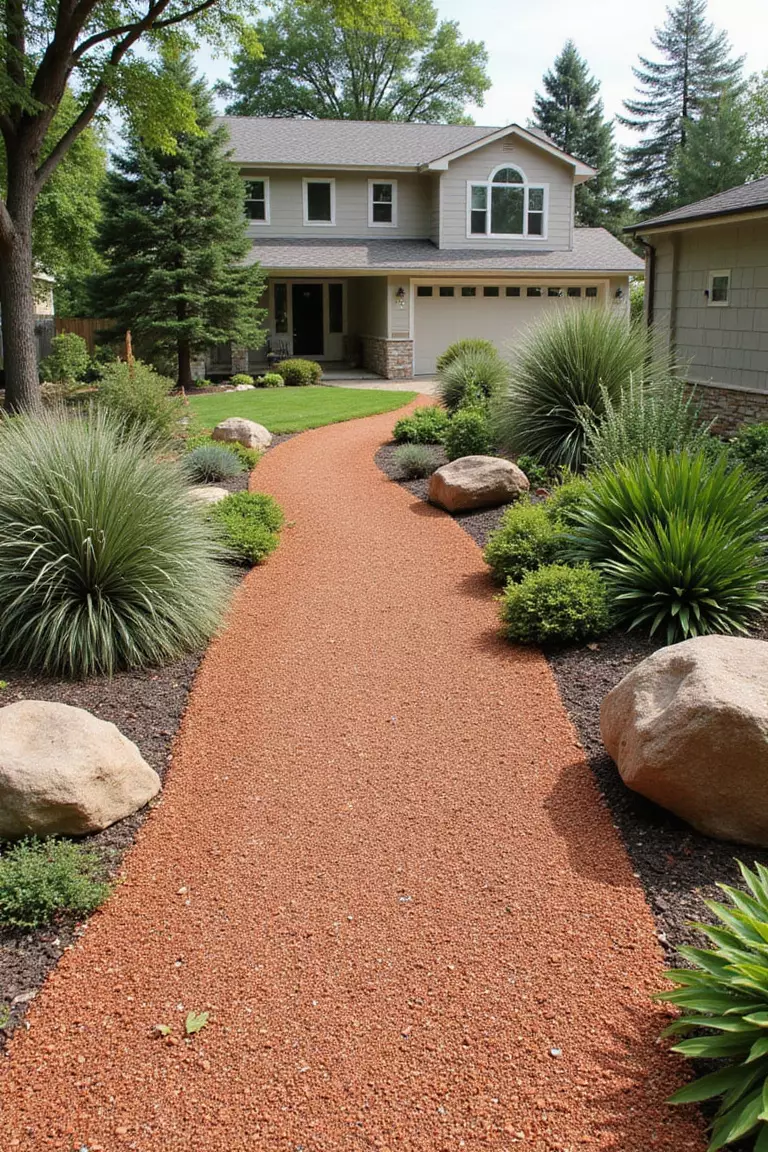
Decomposed granite creates firm paths that still feel natural.
When compacted and watered, it forms a surface almost as hard as concrete but more permeable.
It comes in earthy colors that blend with the landscape.
Add a stabilizer in rainy climates to prevent erosion.
It’s perfect for modern or desert gardens.
Grass Path

Grass paths feel soft underfoot and create a green ribbon through your garden.
Choose durable grass varieties that handle foot traffic.
Mow regularly to keep the path defined.
Add stepping stones for wet days.
This path style works best in areas with regular rainfall or irrigation.
Mosaic Path

Mosaic paths turn your garden walk into art.
Use broken tiles, glass pieces, or colored stones to create patterns.
Set pieces in concrete for permanence.
Start with a simple design before tackling something complex.
This path type works well in small areas where you’ll appreciate the detailed craftsmanship.
Circular Stone Center

Creating a circular stone center with paths radiating outward organizes your garden like a wheel.
This design draws the eye to a central feature—perhaps a bench or birdbath.
It works in both large and small spaces.
The formal geometry contrasts nicely with looser plantings around the edges.
Pine Needle Path
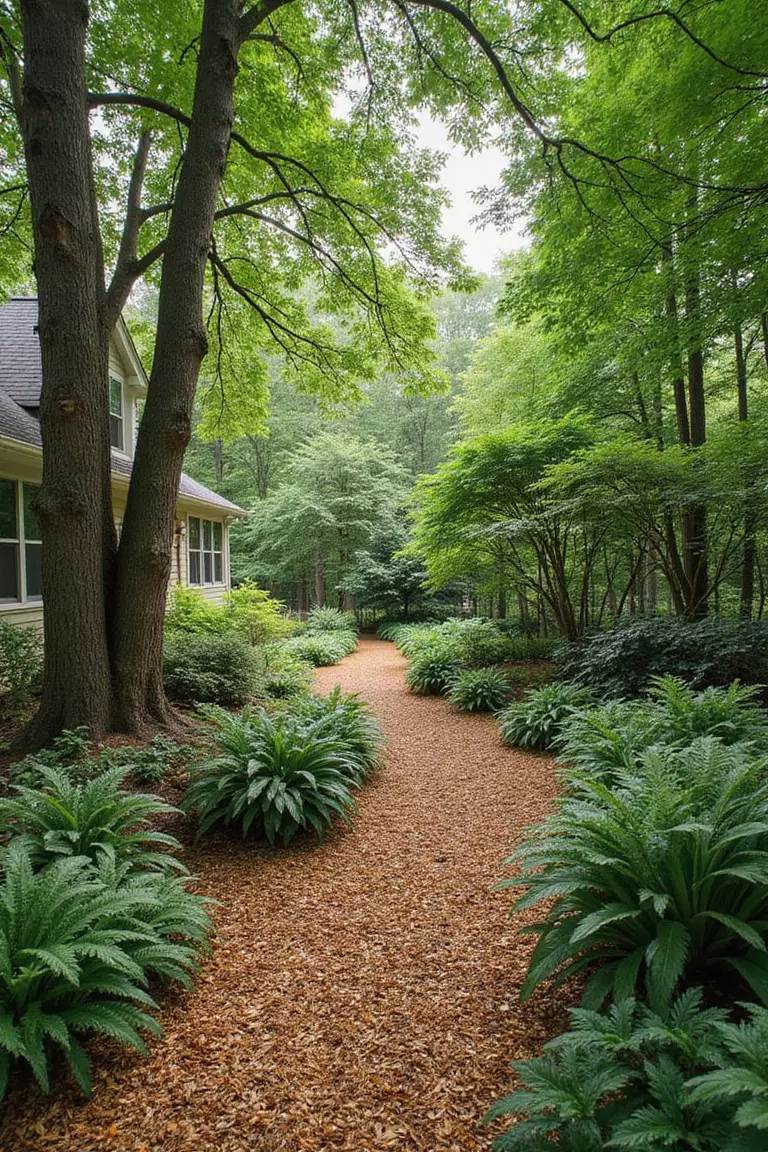
Pine needle paths add woodland charm and a springy feel underfoot.
They’re free if you have pine trees, or inexpensive to buy in bales.
The needles suppress weeds and break down slowly.
Refresh the path yearly with a new layer.
They work best in informal, naturalistic garden styles.
River Rock Path
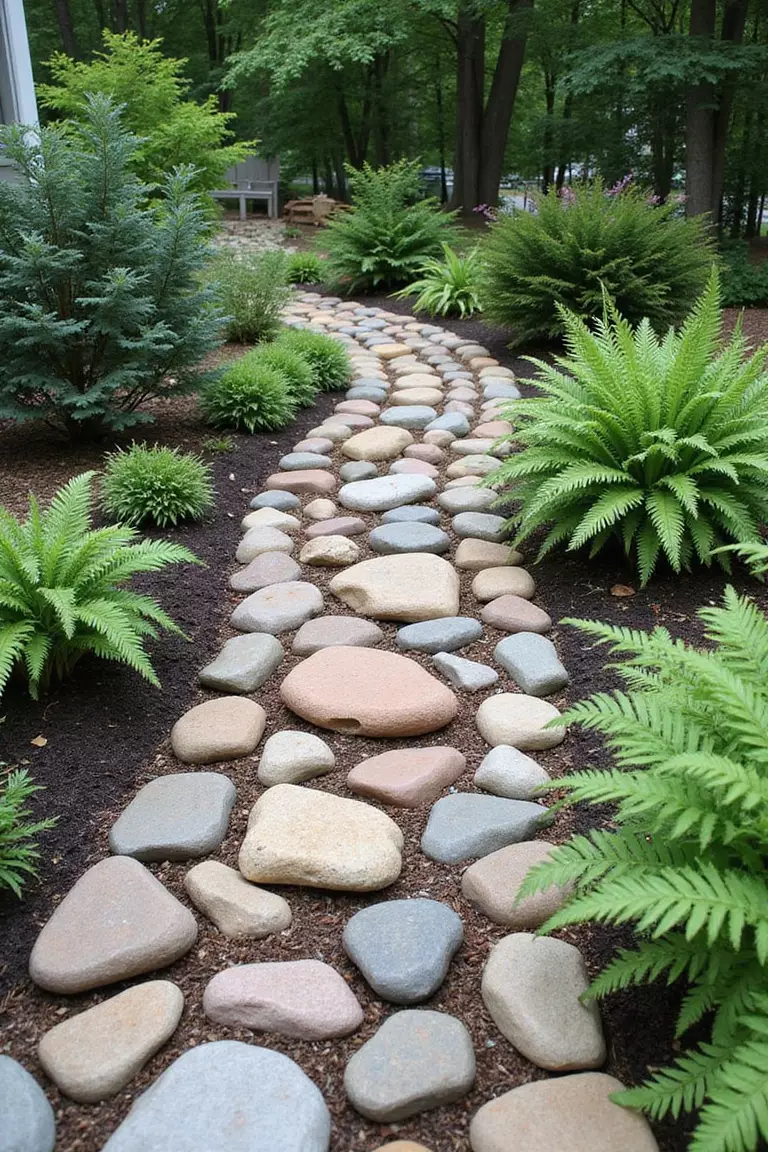
River rocks create paths with wonderful texture and natural appeal.
The smooth, rounded stones come in various sizes and earthy colors.
They’re particularly effective near water features.
Set larger stones in concrete for stability, or use smaller ones as a loose surface.
They last virtually forever.
Glass Block Path
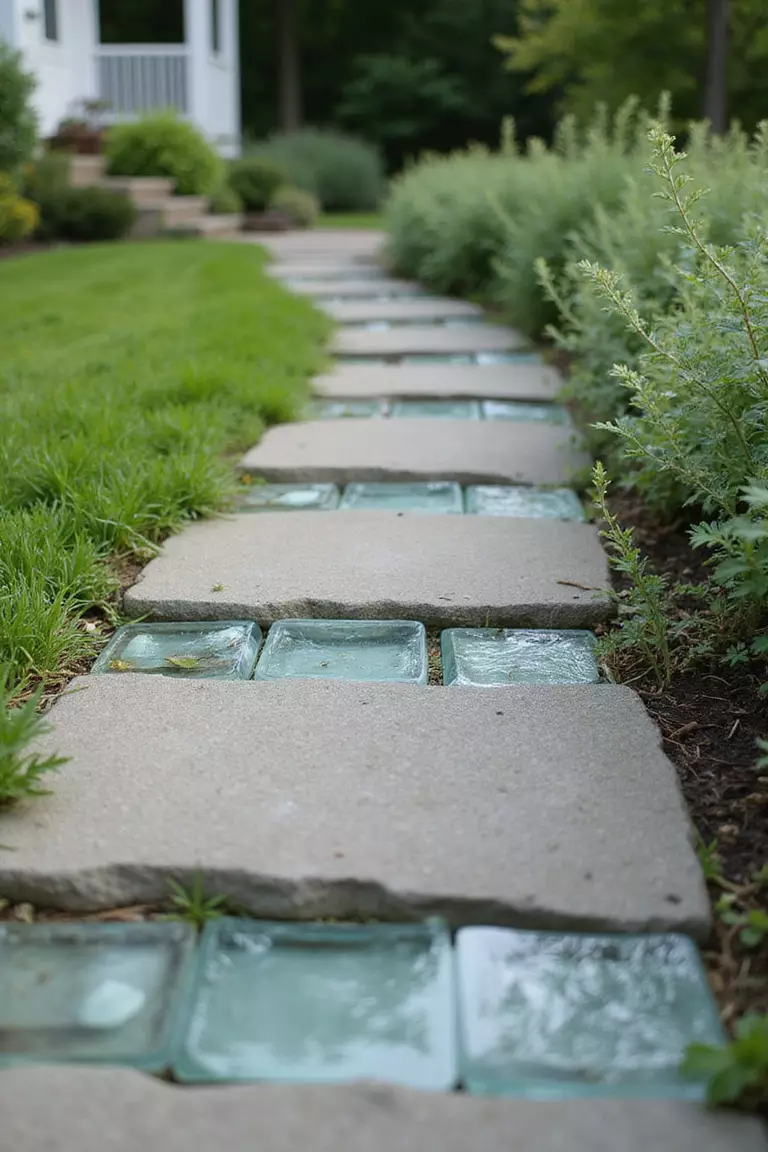
Glass blocks embedded in concrete create magical effects when sunlight—or nighttime lighting—shines through them.
You can use clear or colored glass for different moods.
Install blocks level with the path surface for easy walking.
This modern touch works well in contemporary garden designs.
Formal Hedge-Lined Path
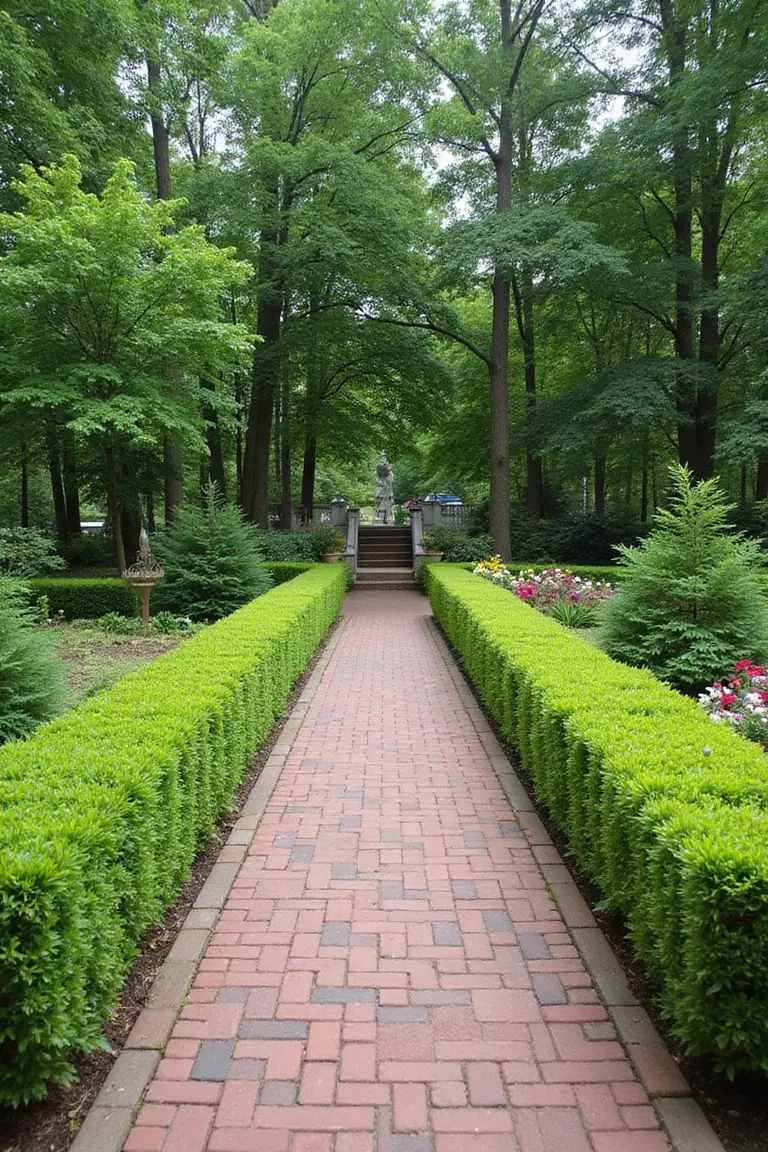
Lining your path with matching hedges creates an elegant, formal feel.
The living walls guide visitors through your garden and create a sense of mystery about what’s around the bend.
Choose boxwood, yew, or holly for evergreen structure.
Trim regularly to maintain the crisp lines.
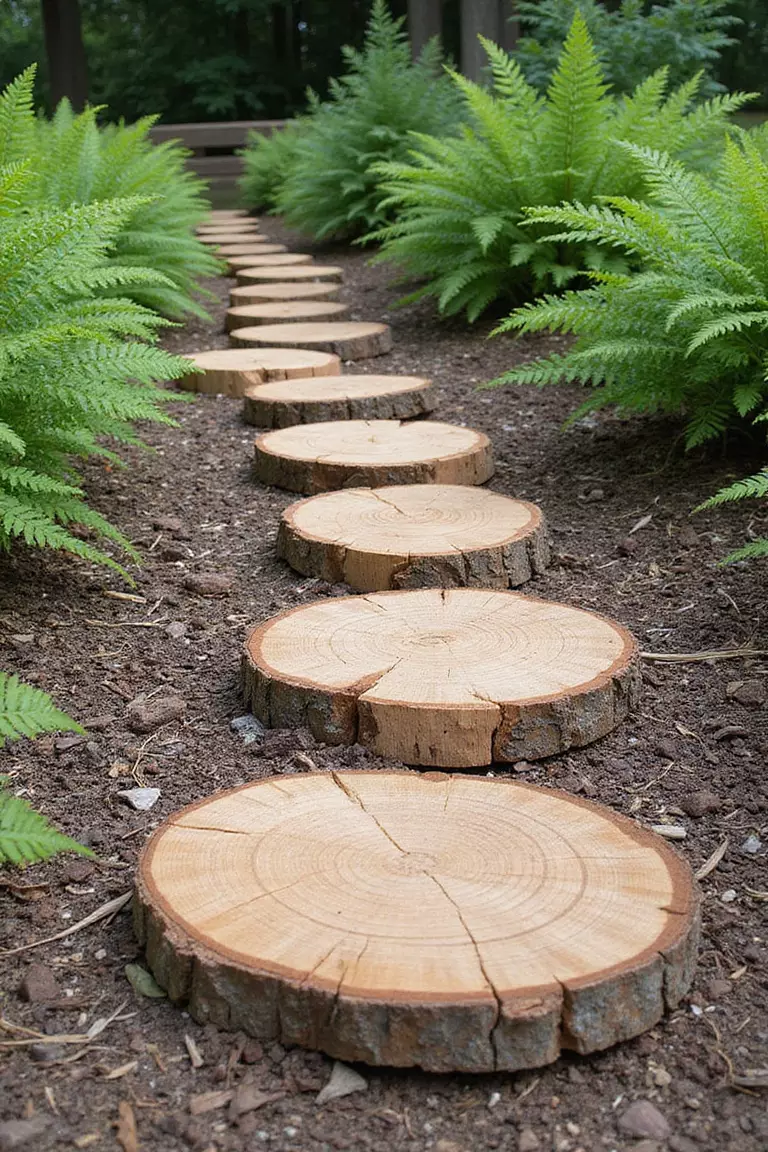
Rock and Timber Path
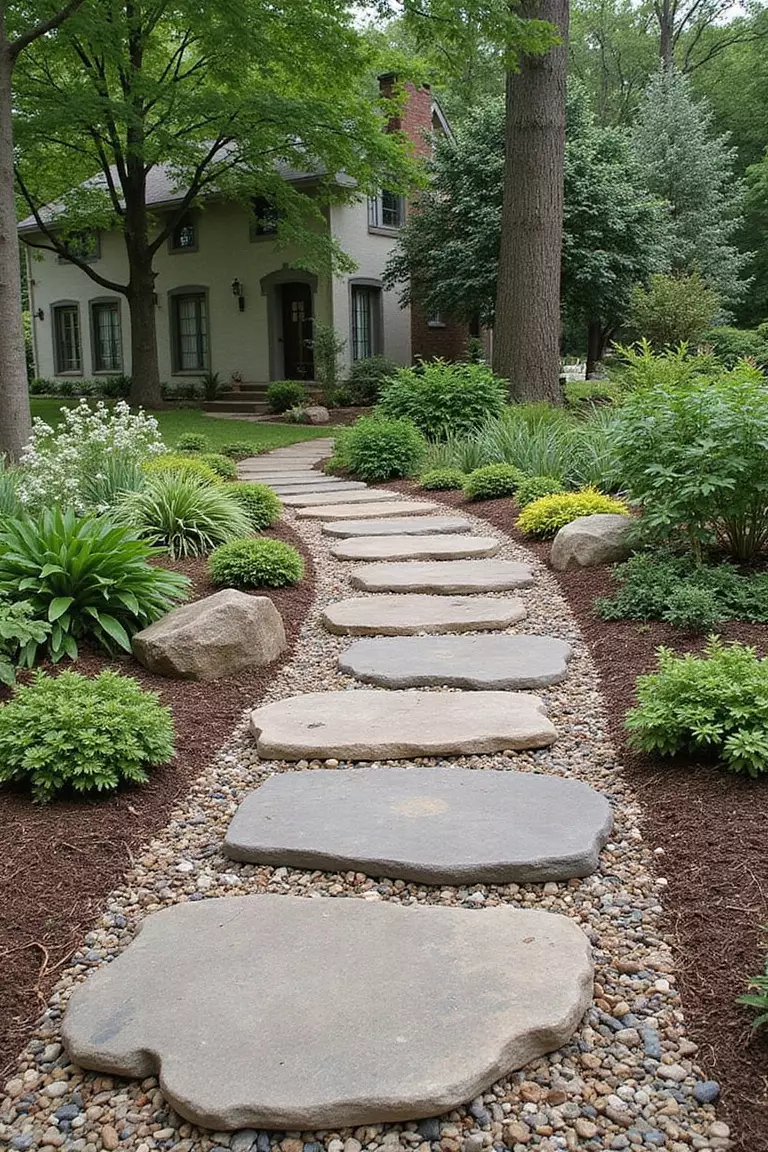
Combining wood rounds with rocks creates paths with rustic charm.
The contrast between smooth timber and textured stone adds visual interest.
Set wooden pieces firmly in gravel or sand to prevent wobbling.
This path style works particularly well in woodland or cottage gardens.
Glow-in-the-Dark Path

Adding glow-in-the-dark stones to your path creates nighttime magic.
These stones absorb sunlight during the day and release a gentle glow after dark.
Mix them with regular stones or use them to mark path edges.
They’re perfect for evening garden enjoyment and add safety by marking the way.